
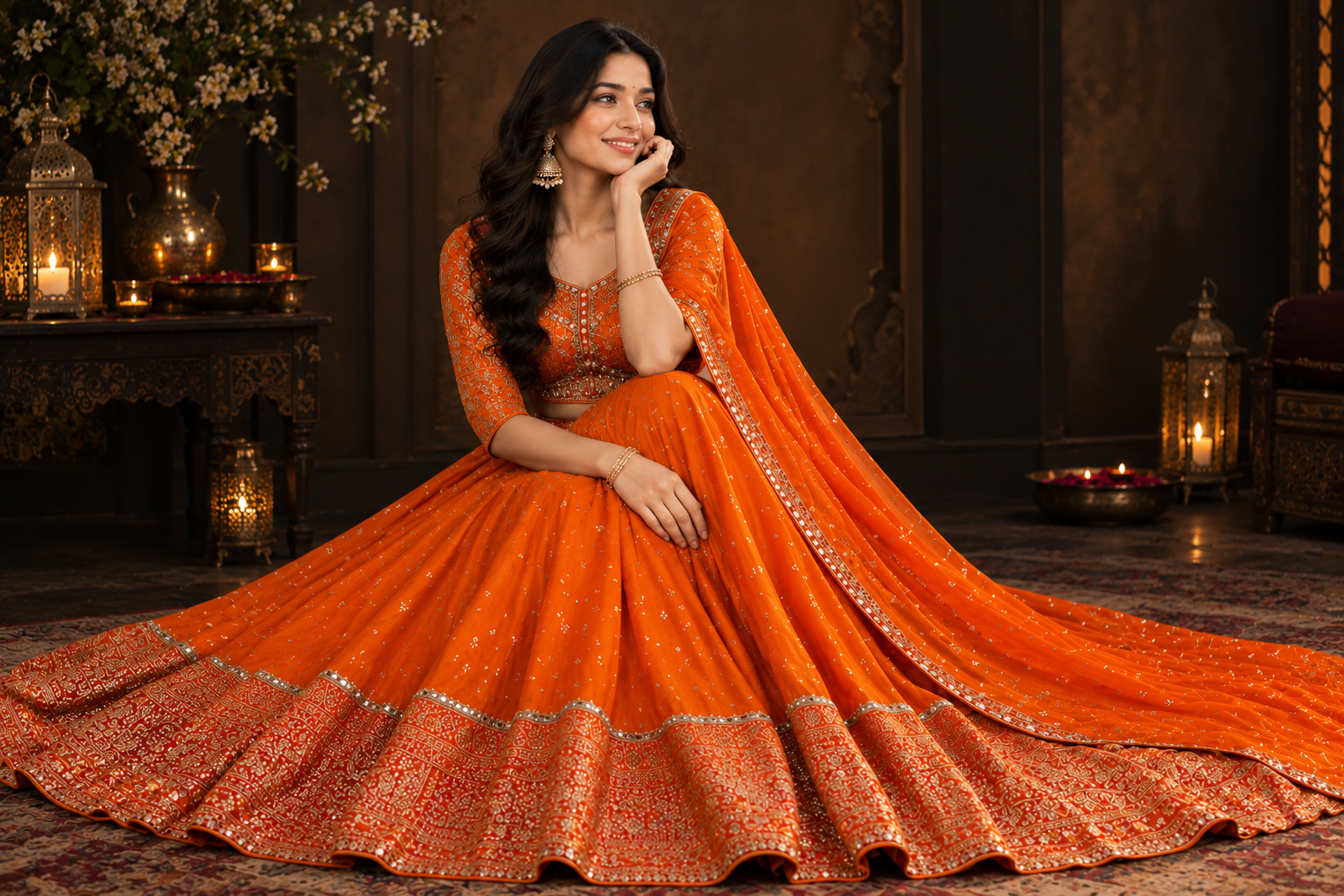
A lehenga doesn’t really come together until the dupatta is draped right. Get the lehenga dupatta wrong, and even a gorgeous outfit can look unfinished. Get it right, and suddenly the whole thing has movement, structure, and that extra bit of drama it needed.
This isn’t about one “correct” way to drape it either – there are several styles worth knowing, and picking between them usually comes down to the outfit, the occasion, and honestly, how much fuss you want to deal with on the day.
It’s easy to think of the dupatta as an afterthought – something tossed over the shoulder once the lehenga and blouse are sorted. But it actually frames the blouse, softens where the top meets the skirt, and adds flow to the whole silhouette. Skip it or drape it carelessly, and even a heavily embroidered lehenga can end up looking oddly bare.
The way it’s styled changes the whole mood too. Pin it in neat, structured pleats and it reads as formal and traditional. Let it fall loose and flowing, and the same outfit suddenly feels more relaxed, more modern. That’s really why so many people spend time figuring out how to wear their dupatta before a big event – it changes more than people expect.
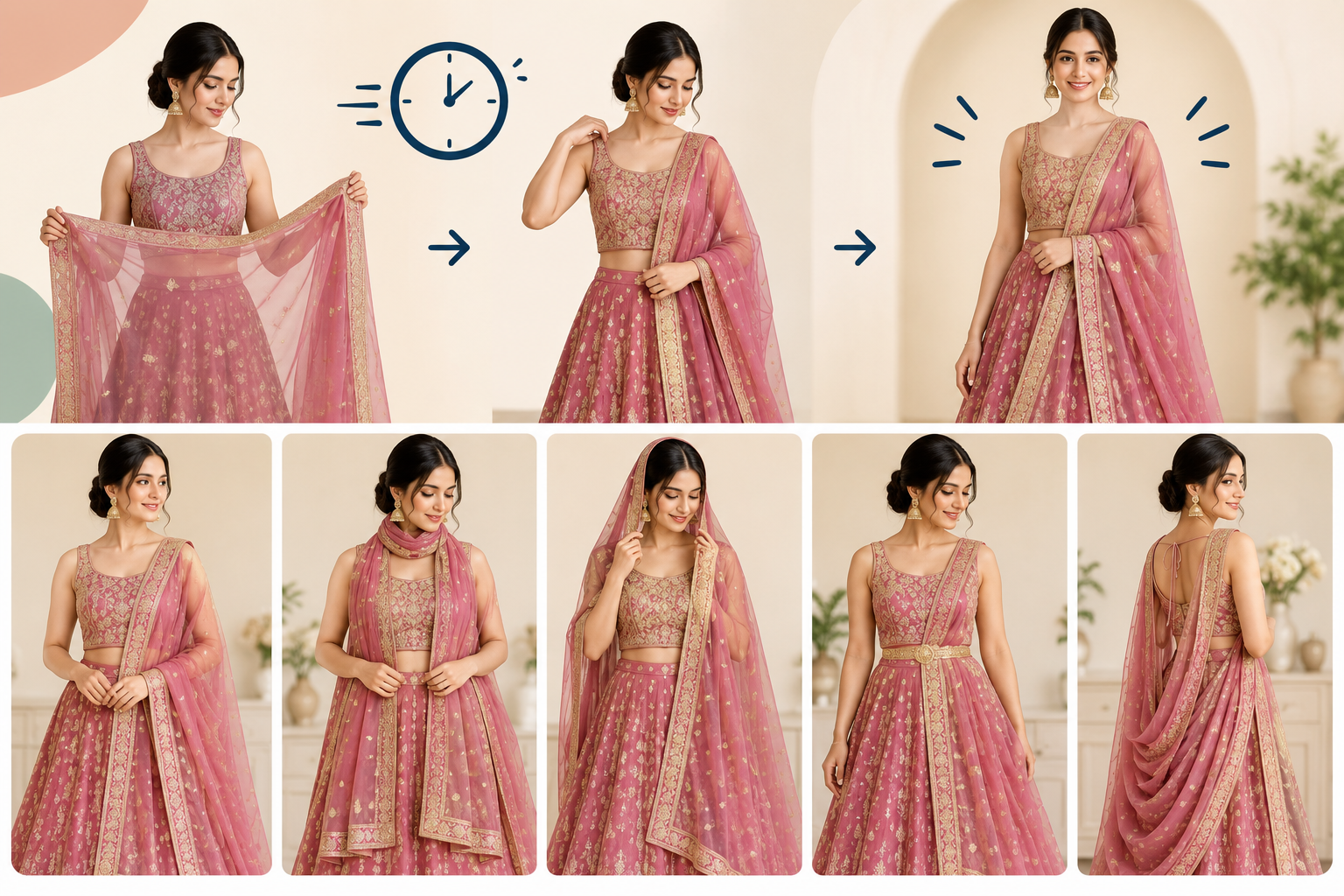
This is the one most people default to, and for good reason. Pleat the dupatta neatly, pin it at one shoulder, and let the rest fall down the back or over an arm.
It keeps the embroidery visible, and – just as important – it leaves your hands free. For weddings and functions where you’re on your feet for hours, that matters more than it sounds like it should.
Brides tend to go for this one specifically. It uses two dupattas – one draped over the head and shoulders, the other pinned separately and often layered or crossed at the front.
It’s a fuller, more regal effect, which explains why it’s rarely seen outside bridal wear. The catch is that it needs careful pinning; two layers moving independently through a long ceremony is asking for trouble if they’re not secured properly.
Not every dupatta has to sit on the shoulder. Wrapping it around the waist instead – belt-style, with the ends tucked in or left hanging – has become a favorite for anyone wanting something a bit more modern.
It works especially well when the blouse itself is heavily embellished, since this style keeps it fully on display instead of half-covering it. It’s also a good pick for shorter or lighter functions where a full traditional drape feels like overkill.
Here, the dupatta gets pleated and left to fall straight down the front – a bit like how a saree pallu is sometimes worn. It gives a cleaner, more structured look, and it works particularly well when the dupatta has a heavy border, since that border ends up framing the front of the whole outfit.
Anyone who wants the embroidery front and center, rather than trailing off behind the shoulder, tends to gravitate toward this one.
Banarasi dupattas are a different beast – heavier, more textured than your usual net or georgette. Loose, flowy pleats don’t really hold up here; the fabric’s weight tends to pull them out of shape. Even secure pleats pinned firmly at the shoulder work much better.
And since Banarasi fabric already brings plenty of detail on its own, there’s usually no need to layer on extra styling – simpler is better here.
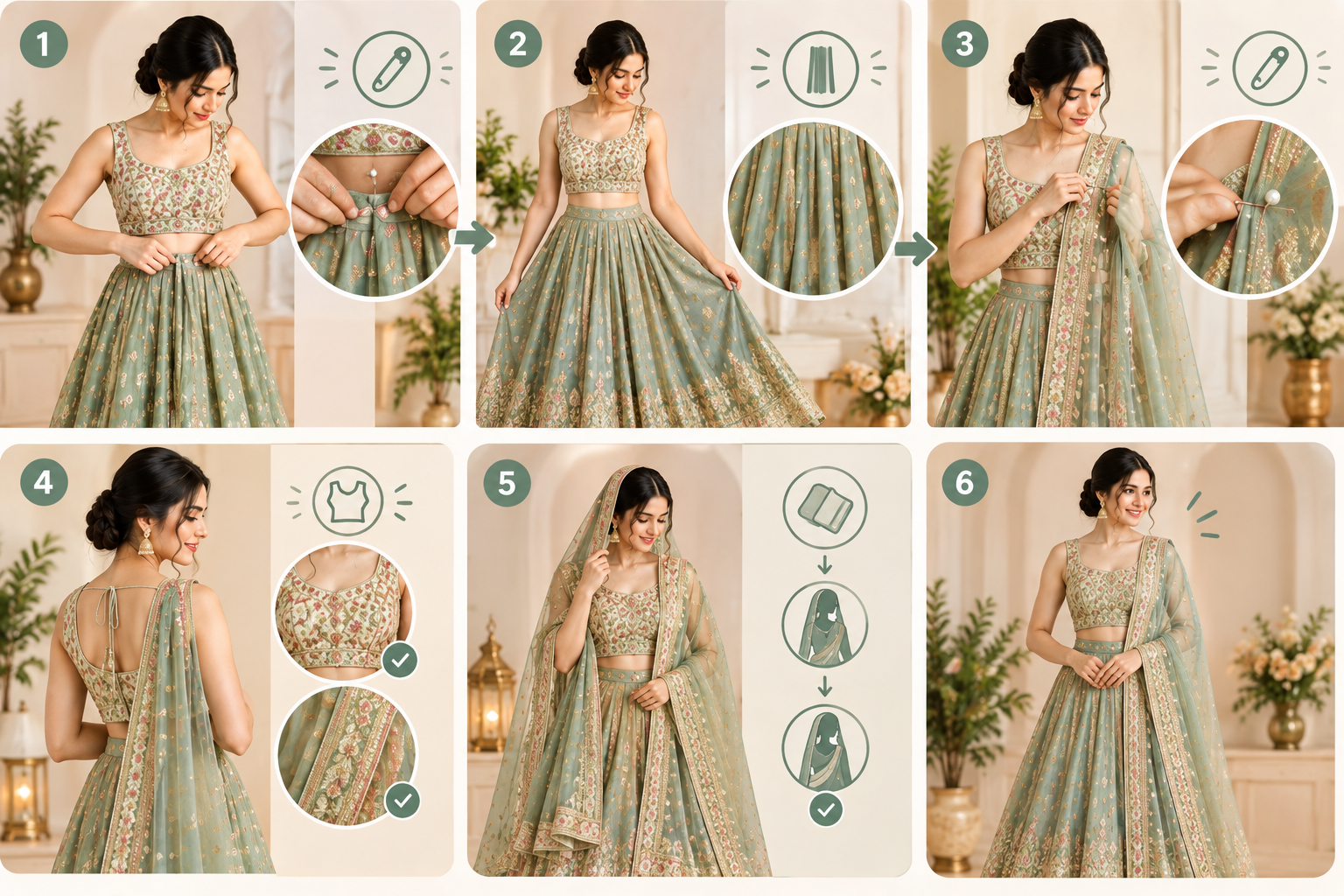
Some small habits make draping noticeably less stressful:
Weddings usually call for either the double dupatta look or a structured shoulder drape – both hold up well through long ceremonies and photograph nicely. Sangeets and receptions are a different story, though; a looser, more flowing drape gives you room to actually move, which matters a lot if there’s dancing involved.
For daytime festive events, keep it simpler. A one-shoulder drape or a front pleated style feels elegant without weighing the outfit down, and lighter fabric holds up better through a long day anyway.
There’s genuinely no harm in trying a few different approaches before deciding:
Which one lands right depends on the blouse, the weight of the fabric, and what the day actually involves.
There’s no single “right” way to drape a lehenga dupatta – it really comes down to the outfit, the event, and how much movement you’ll need through the day. The one-shoulder drape stays a safe, reliable option for most occasions, while the double dupatta brings extra drama for bridal looks. Waist and front drapes offer something more contemporary for anyone who’d rather keep the blouse visible. Trying a couple of these out beforehand makes it a lot easier to land on the one that actually feels right when the day comes.
Q1. How to wear a lehenga dupatta for a wedding?
A structured shoulder drape or a double dupatta look works best for weddings, as both hold up well through long ceremonies.
Q2. How to wear lehenga dupatta for a modern look?
Wrapping it around the waist like a belt gives a more contemporary look while keeping the blouse visible.
Q3. How to drape a banarasi lehenga dupatta?
Pin it in even, secure pleats at the shoulder, since the heavier fabric needs firmer support to hold its shape.
Q4. How to wear a lehenga dupatta if dancing is involved?
A looser, flowing drape works best, as it allows easier movement during sangeets or receptions.
Q5. What are the different ways to wear a lehenga dupatta?
Try a one-shoulder drape, double dupatta, waist drape, or front pleated style depending on the blouse and occasion.
Get more Indian fashion styling ideas and outfit inspiration at Indian Fashion Blog.
