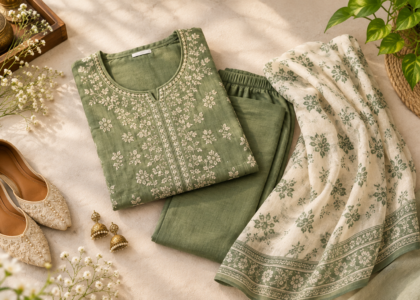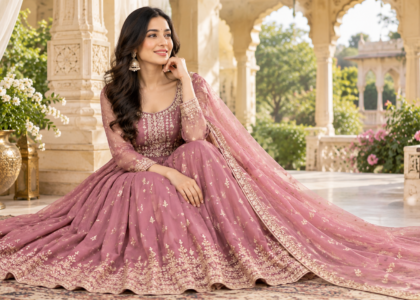
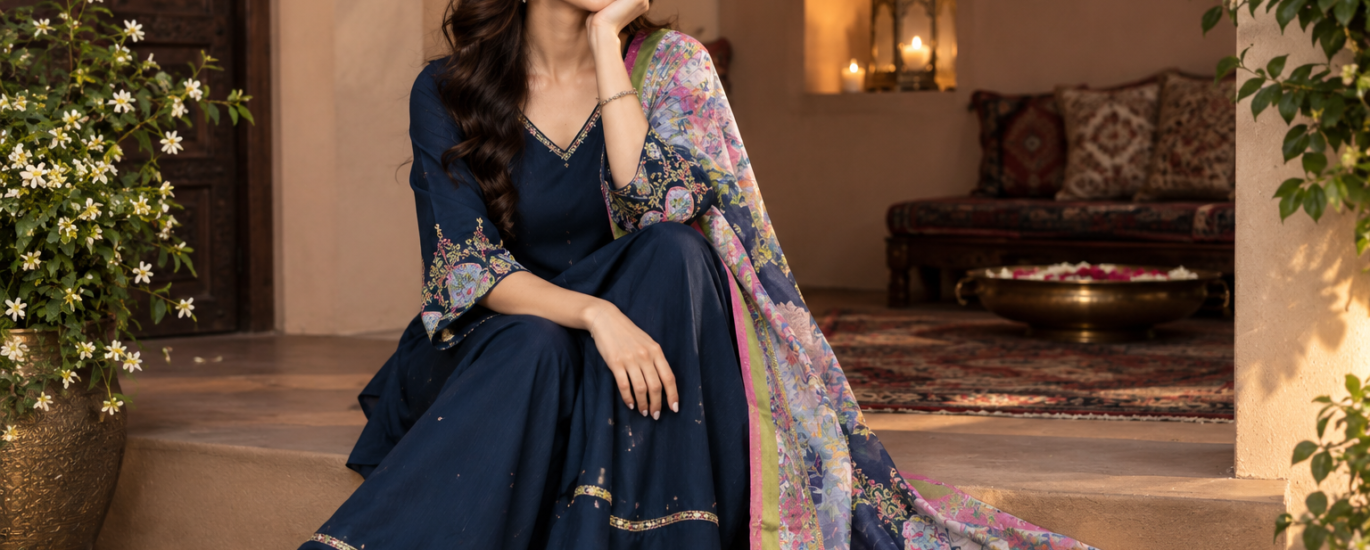
A farshi salwar suit brings together a few things that don’t always come as a package deal – a flowing silhouette, a long graceful kurta, and those wide, dramatic trousers that pool around the ankles. It’s got a traditional feel at its core, but pair it with the right dupatta, jewellery, and footwear, and it can look surprisingly current too.
What sets a farshi salwar suit apart from your usual fitted styles is the sheer amount of movement built into it. The wide trousers create that soft, floor-skimming drape, while the kurta up top keeps things structured. That combination makes a farshi suit a natural fit for weddings, festive get-togethers, and family celebrations – basically any occasion where you want to look a bit more dressed up than usual.
What Actually Makes a Farshi Suit Different
The first thing anyone notices about a farshi suit is the trousers – there’s just so much fabric involved, and it’s designed that way on purpose to create that graceful fall around the legs. Add a longer kurta and a dupatta on top, and you end up with something that reads as traditional but still feels polished, not costume-y.
- There’s a fair bit of variety within a farshi suit too.
- Some come with delicate embroidery; others lean on prints, decorative borders, sequins, zari work, or contrasting fabric panels.
- Which one you go for really depends on where you’re headed – a lighter cotton or printed farshi suit works for a daytime function, while silk blends, velvet, or tissue fabric push it into proper festive territory.
Picking the Right One
- Fabric’s really the first thing to sort out when shopping for a farshi salwar suit – it decides how the trousers fall and whether you’ll still be comfortable in it hours later.
- Cotton or lightweight blends are the safer pick for daytime events; they move easily and don’t start feeling heavy after a while.
- Weddings are a different story though – silk blends, velvet, brocade, or embellished fabric give the whole outfit that richer, more finished look you’d want for the occasion
Wearing a Farshi Suit for Festivals
Festivals are basically made for a farshi suit. Rich colours, decorative borders, and a well-done dupatta – all of that does most of the heavy lifting without needing a dozen extra accessories.
- Deep green, wine, maroon, royal blue, burgundy, mustard, and classic red – these all work beautifully for festive settings.
- If you want something a little lighter for a daytime function, blush pink, ivory, peach, or sage green do the job just as well.
Pair a festive farshi suit with jhumkas, a few bangles, a small clutch, and maybe embellished footwear. If the suit’s already got heavy embroidery going on, though, dial back the jewellery – otherwise it starts competing with itself.
Styling a Farshi Suit for Weddings
Weddings call for a bit more effort, and a farshi salwar suits handles that well. Look for something with a luxurious finish – zari borders, embroidery, sequins, fine threadwork, that sort of detail.
A heavily decorated dupatta can honestly become the star of the whole outfit. Drape it over one shoulder for a slightly casual feel, or across both for something more traditional and full-coverage.
- For jewellery, chandbalis, statement earrings, a stack of bangles, or a simple necklace all complement a farshi salwar suit well.
- Embellished juttis or low heels round things off nicely, and they’re comfortable enough to survive a few hours of standing around at a wedding.
Getting the Colours Right
- Colour changes the whole personality of a farshi suit.
- For daytime events, lighter shades – cream, beige, powder blue, peach, lavender, soft pink – keep things fresh, and they pair really well with small florals or subtle embroidery.
- Evening events call for more depth.
- Emerald, navy, plum, burgundy, black, and deep red – these look great with metallic embroidery and bolder jewellery.
A contrasting dupatta is another easy trick. A plain farshi salwar suit looks sharper with a printed or embellished dupatta, while a heavily patterned one usually looks better toned down with something simpler on top.
Making a Farshi Suit Feel More Modern
- A farshi salwar suit doesn’t have to look dated just because it’s rooted in tradition.
- A clean neckline and minimal embroidery on the kurta already push it toward something more contemporary.
- Swap out the traditional potli for a structured handbag, or trade heavily embellished juttis for plain heels.
Jewellery can shift the whole vibe too. Small earrings and a delicate bracelet keep it understated, while oversized statement earrings can turn the same farshi salwar suit into something that works for an evening event instead.
Even the hairstyle matters more than people expect – a neat bun gives it a polished finish, while loose waves soften the whole look.
What to Wear on Your Feet
Footwear needs to match the volume of a farshi salwar suit rather than fight against it. Embellished juttis are a solid pick for daytime celebrations, and they suit the traditional character of the outfit well.
- Low block heels add a bit of height without making walking difficult, and for evening functions, embellished heels can dress things up a notch further.
- Just steer clear of anything too chunky or bulky – the salwar’s already doing enough volume-wise, and heavy shoes just add unnecessary bulk on top of that.
Getting the Fit Right
- Fit makes or breaks a farshi suit, honestly.
- The kurta needs to sit comfortably across the shoulders and chest – nothing pulling when you lift your arms or move around.
- The salwar, meanwhile, should have room to breathe.
- Since the whole design leans on that wide, flowing shape, there’s no reason to size down or go tight.
Length is worth double-checking too. The trousers of a farshi salwar suit should create that flowing effect without constantly bunching up or catching under your footwear as you walk.
Choosing Accessories That Actually Work
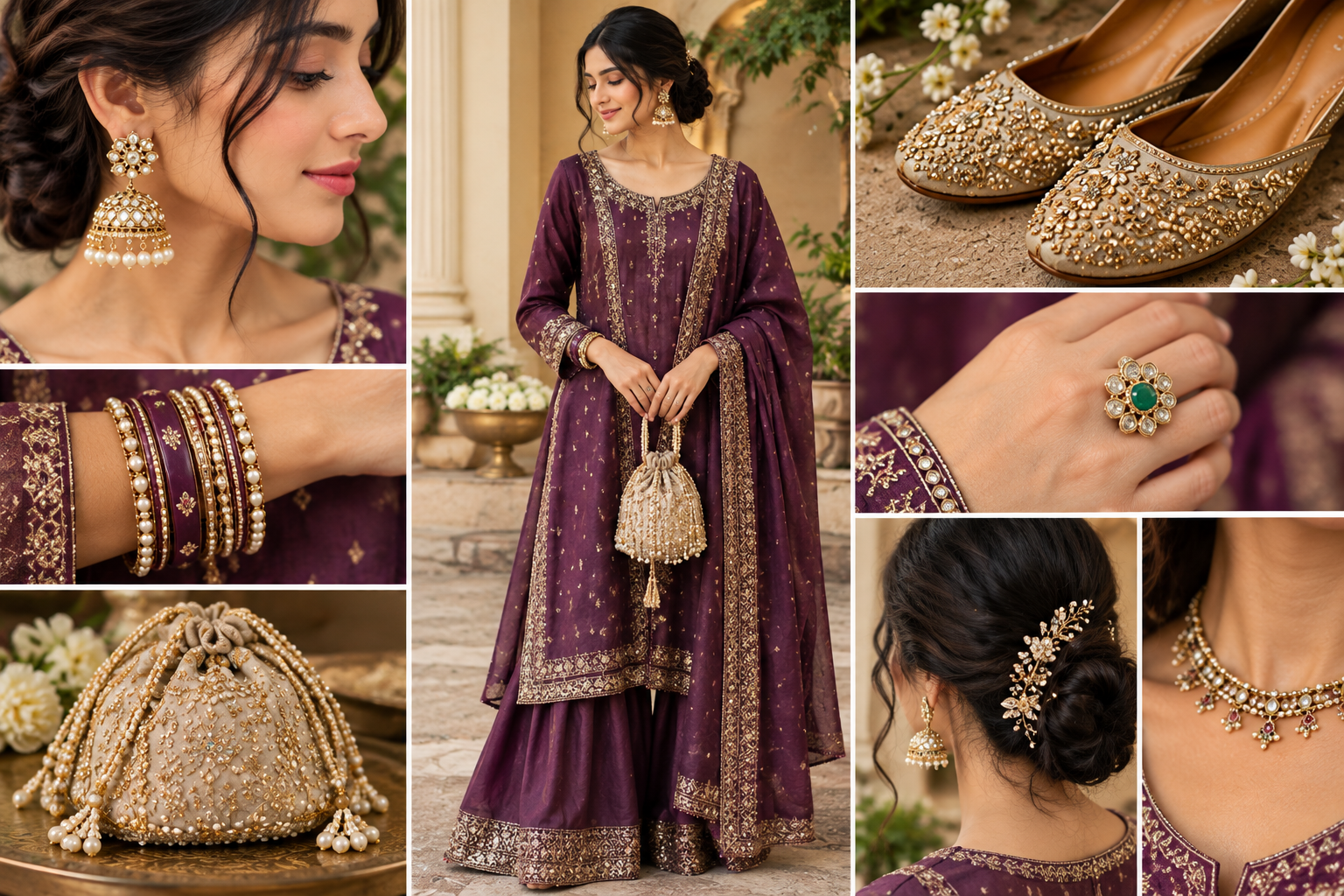
Accessories should support a farshi salwar suit, not compete with it. A simpler suit can handle bolder statement jewellery, while one that’s already embroidered or embellished probably needs less.
A few things worth keeping in mind:
- Jhumkas or chandbali earrings
- A stack of traditional bangles
- A small clutch or potli
- Embellished juttis
- A simple ring
- A decorative hair accessory
Want something more modern? Swap those out for a structured handbag, minimal earrings, and simple heels instead.
One Farshi Suit, Several Looks
- Here’s the thing – you don’t need a different farshi salwar suit for every event.
- The same one can look completely different with a few tweaks.
- For something daytime-appropriate, keep the jewellery minimal, go with flat footwear, and drape the dupatta simply.
For an evening event, add statement earrings, swap in heels, and carry a decorative clutch instead. Even changing your hairstyle can make the same farshi salwar suit feel like a brand-new outfit.
FAQs
1. What is a farshi salwar suit?
A long kurta with wide, flowing trousers and a dupatta. The trousers pool softly around the ankles.
2. Which fabric is best for a farshi suit for women?
Cotton or lightweight blends for daytime. Silk blends, velvet or brocade for weddings and festivals.
3. Can I wear a farshi salwar suit set with a dupatta to a wedding?
Yes. A farshi salwar suit with a dupatta suits weddings, especially in zari or embroidery.
4. Is a farsi suit for women the same as a farshi suit?
Yes. “Farsi” is a common alternate spelling. Both mean a kurta with wide, flowing trousers.
5. Which colours suit a farsi kurta set for women?
Deep green, wine, maroon and royal blue for festivals. Cream, peach and lavender for daytime.
See beautiful Farshi suit styling ideas and ethnic fashion looks on Instagram.
Get more ethnic wear ideas, styling tips and traditional fashion inspiration at Indian Fashion Blog.